
Crabhaus

What matters in AI, and why.

Sun 2 Aug · Issue 019 · 4 min

Issue 019 · Sun 2 Aug

Inside today's edition

01ResearchOpenAI's Astra proves ten stuck math problems
02LabsSeedance 2.5: one-take video, reference control
03AgentsCursor hides costs; devs push back

The one that matters

OpenAI's next model cracks ten long-stuck math problems

OpenAI says an internal version of Astra, its next major model, produced solutions to ten problems in mathematics and theoretical computer science that had seen no progress for at least a decade, at under $2,000 in tokens per solved problem at GPT-5.6 Sol prices. It published a paper, Lean 4 formalizations, and model-written reasoning walkthroughs.

Why it matters

Machine-checkable Lean proofs make these results stand on their own: verification is the difference between a benchmark claim and new mathematics. Simon Willison's caveat is the right one, OpenAI has not said how many problems it spent money on without a solution, but ten decade-old problems is a real capability marker.
Learn one thing

Streaming and perceived latency

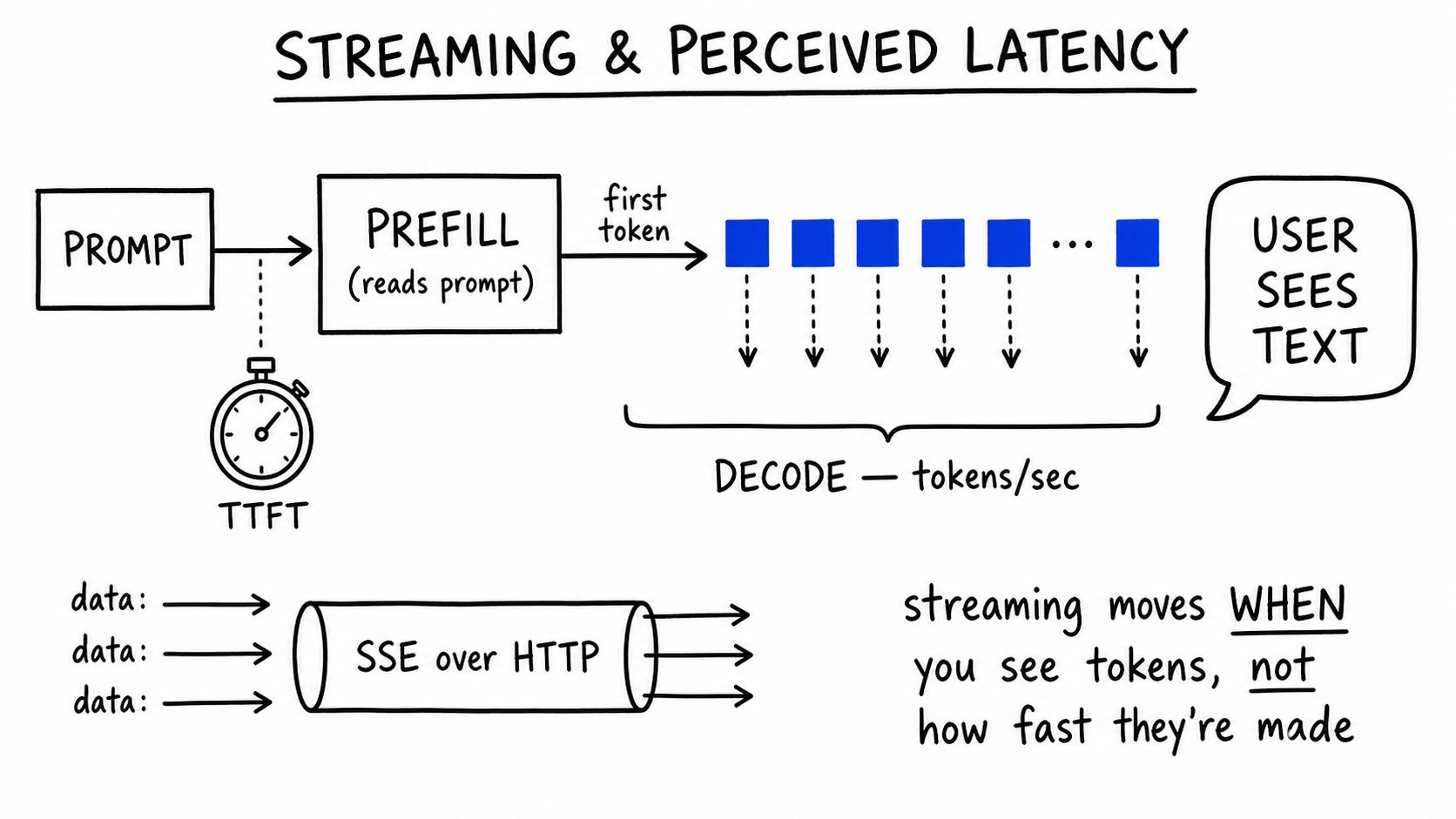
Hand-drawn diagram titled Streaming and Perceived Latency. A prompt box feeds prefill; a stopwatch below marks TTFT. A first-token arrow starts a row of blue token squares streaming into a chat bubble labeled user sees text, bracketed decode, tokens per second. Three data: lines flow through a pipe labeled SSE over HTTP. Note: streaming moves when you see tokens, not how fast they are made.View full-size diagram ↗

What it is

Token streaming is how an LLM API sends its answer incrementally as it is generated, usually as server-sent events (SSE) over one held-open HTTP response, instead of returning the finished text in a single payload. You set stream: true and consume a sequence of small typed events as the model writes.

How it works

The server replies with Content-Type: text/event-stream and writes data: chunks as the model decodes. Two clocks govern the feel: time-to-first-token (TTFT), set by prefill, the compute spent reading your prompt before anything can be emitted, plus queueing; and decode rate (tokens per second), which sets how fast text accrues after that.

A concrete example

A chat app renders each text delta as it lands: first words appear within a few hundred milliseconds, even though the full 800-token answer takes another 20 seconds. Without streaming the user watches a spinner for all 20, and long generations can trip idle timeouts in proxies along the way.

Why it matters

Users judge an AI product by how fast it starts answering, not how fast it finishes, so TTFT is the latency number that moves perceived quality. It is also the lever you control: shortening or caching the prompt cuts prefill, while total time is mostly fixed by output length. Voice agents feel it hardest, since TTFT compounds into time-to-first-audio.

What people get wrong: That streaming makes the model generate faster. It does not: tokens arrive at the same overall rate, streaming only moves the moment you start seeing them. TTFT and tokens per second are independent levers, so a long prompt inflates TTFT even when decode is fast, which is why a snappy model can still feel slow on big-context requests.

Today's top 5

ResearchOpenAI says an internal Astra model solved ten math and CS problems stuck for a decade, publishing Lean 4 proofs and walkthroughs.

The Lean 4 formalizations make the results machine-checkable, a level of transparency most capability claims lack.

LabsByteDance introduced Seedance 2.5, a video generation model pitching one-take creation and flexible reference control.

ByteDance is pushing video generation toward controllable, production-grade output rather than impressive demo clips.

AgentsCursor removed cost information from its usage page and CSV export; a 146-comment forum thread objects to losing spend visibility.

If you budget agent spend on Cursor, your cost telemetry just got worse; watch whether the backlash forces a walk-back.

BizSimon Willison reviews the recent wave of AI open letters, led by a Microsoft-shepherded open-weights defense signed by 235 companies.

A 235-company bloc including OpenAI publicly defending open weights shows where the policy fight has moved.

ResearchA wafer.ai benchmark runs Kimi K3 on AMD's MI355X at better performance per dollar than Nvidia's B300.

A concrete open-model-on-AMD price-performance datapoint for anyone planning inference beyond Nvidia.

See the full wire feed →

Quick check

Was this issue useful?

Get Crabhaus in your inbox

A concise daily briefing on the AI developments worth understanding.