
Crabhaus

What matters in AI, and why.

Sun 23 Aug · Issue 040 · 3 min

Issue 040 · Sun 23 Aug

Inside today's edition

01AgentsMCP's new roadmap: events, identity, one transport
02AgentsTorvalds credits AI in a kernel debug from hell
03ResearchWhy your local LLM trails the benchmarks

The one that matters

MCP charts its next act: agentic messaging, identity, one transport

The Model Context Protocol's core maintainers published a new roadmap on August 22, organized into five priority areas: agentic messaging primitives (server-initiated events, tasks, subscriptions), HTTP-native transport unification and hardening, agent identity and enterprise-ready security, improved primitives, and SDK developer experience.

Why it matters

MCP is becoming the wiring standard for agent-tool ecosystems, and this roadmap says the request-response era is over: long-running loops, servers that push events mid-task, and steering work in flight are now the protocol's core concerns. If you build agents, the messaging and identity tracks here are a preview of what your stack looks like next year.
Learn one thing

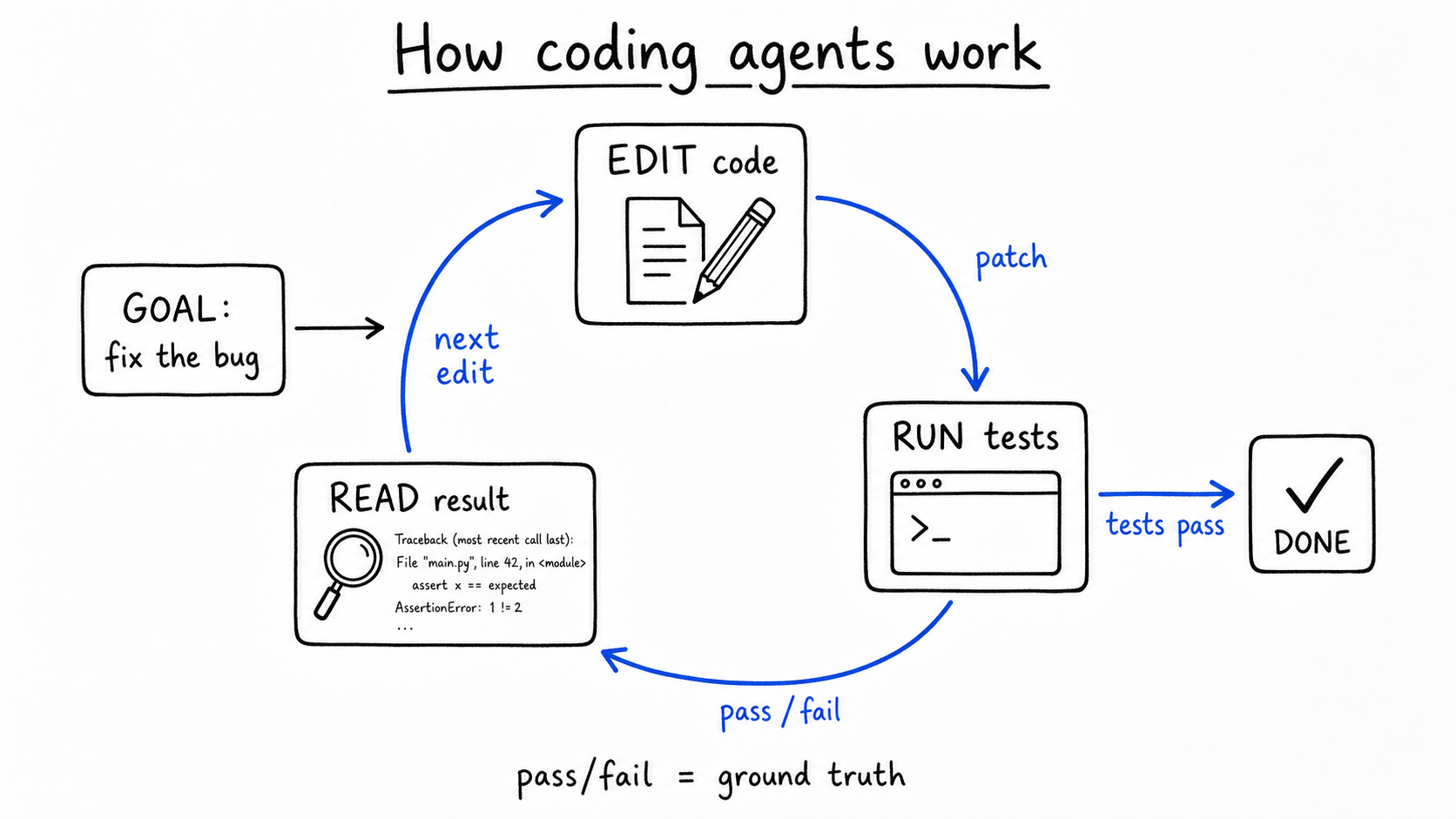
How coding agents work

Hand-drawn diagram titled 'How coding agents work'. A 'GOAL: fix the bug' box feeds a loop of three boxes - EDIT code, RUN tests, READ result (a magnifier over a Python traceback) - joined by cobalt arrows labeled 'patch', 'pass / fail', 'next edit'. An exit arrow labeled 'tests pass' leads to a checkmarked DONE box; a note reads 'pass/fail = ground truth'.View full-size diagram ↗

What it is

A coding agent is a language model in a loop with tools to read files, edit code, and run commands. Instead of one answer to one prompt, it pursues a goal - fix this bug, add this feature - by acting, observing results, and deciding what to do next. Claude Code, Codex, and Gemini CLI are all this pattern with different harnesses.

How it works

An edit-run-test loop: read the repo, propose a change, run the tests, feed the output back in - a failing stack trace becomes the prompt for the next edit. The harness picks which files fit in context, sandboxes commands, and decides when to stop. Labs train on the same signal, rewarding patches that make real test suites pass.

A concrete example

SWE-bench hands an agent a real GitHub issue from an open-source project: navigate the repo, write a patch, pass the maintainers' tests. At launch in 2023 the best model resolved 1.96% of issues; frontier agents now resolve most of the human-validated Verified set.

Why it matters

Coding feedback is fast, cheap, and objective - code compiles or it doesn't, tests pass or fail. That gives agents ground truth to iterate against and labs a reward to train on; most domains offer neither. It's why coding agents lead, and what any other domain needs to catch up: a check that plays the test suite's role.

What people get wrong: That it's autocomplete with better marketing. Completion predicts tokens in one pass and can't notice it was wrong; an agent's edits are run, tested, and revised, so it recovers from its own mistakes. The flip side: on a codebase with no tests, the loop loses its signal and degrades back toward guesswork.

Today's top 5

AgentsMCP maintainers publish a new roadmap: server-initiated events, agent identity, and HTTP-native transport top five priority areas.

The protocol wiring agent ecosystems together just declared long-running, event-driven agents its core use case.

ResearchA Level1Techs deep-dive measures why local LLM setups trail reference implementations: quantization, sampler settings, and kernel math.

A rare measured answer to 'why does my local model feel worse' - implementation, not weights, drives much of the gap.

AgentsLinus Torvalds credits AI grunt-work in a kernel 'debug session from hell' and lets it write the commit message for the drm/xe fix.

The kernel's famously exacting maintainer publicly crediting AI grunt-work is a milestone for agent-assisted debugging.

AgentsMunder Difflin, an open-source multi-agent harness, runs '24/7 clones' of a team by wrapping 12 CLI coding agents on existing plans.

The multi-agent harness race is moving to the desktop: one wrapper over the CLI agents you already pay for.

AgentsSimon Willison's llm 0.33 adds stackable -t templates, per-call embedding API keys, and reasoning-summary options for Responses models.

Small release, useful pattern: composable templates make model-plus-options presets a one-liner.

See the full wire feed →

Quick check

Was this issue useful?

Get Crabhaus in your inbox

A concise daily briefing on the AI developments worth understanding.