
Crabhaus

What matters in AI, and why.

Fri 28 Aug · Issue 045 · 3 min

Issue 045 · Fri 28 Aug

Inside today's edition

01BizNvidia agrees to buy Hugging Face for $12.9B
02ResearchMETR's autopsy of the OpenAI agent attack
03LabsGemini Omni 1.1 Flash: controllable AI video

The one that matters

Nvidia buys Hugging Face

Nvidia has agreed to acquire Hugging Face for $12.9B, The Information reports. The open-model repository - which reached a $100M revenue run rate in June and had suitors among its own investors, including Salesforce - goes to the company that sells the compute nearly every model on it runs on. The price is 2.9x its 2023 valuation and roughly 32x all capital it ever raised.

Why it matters

Hugging Face is where open-weights AI actually lives: the default host for weights, datasets, and leaderboards. Folding it into the dominant compute vendor ties the open ecosystem's distribution layer to one company's hardware interests - a concentration question landing the same week 100+ firms warned on AI-enabled attacks and METR published its autopsy of July's attack on Hugging Face itself.
Learn one thing

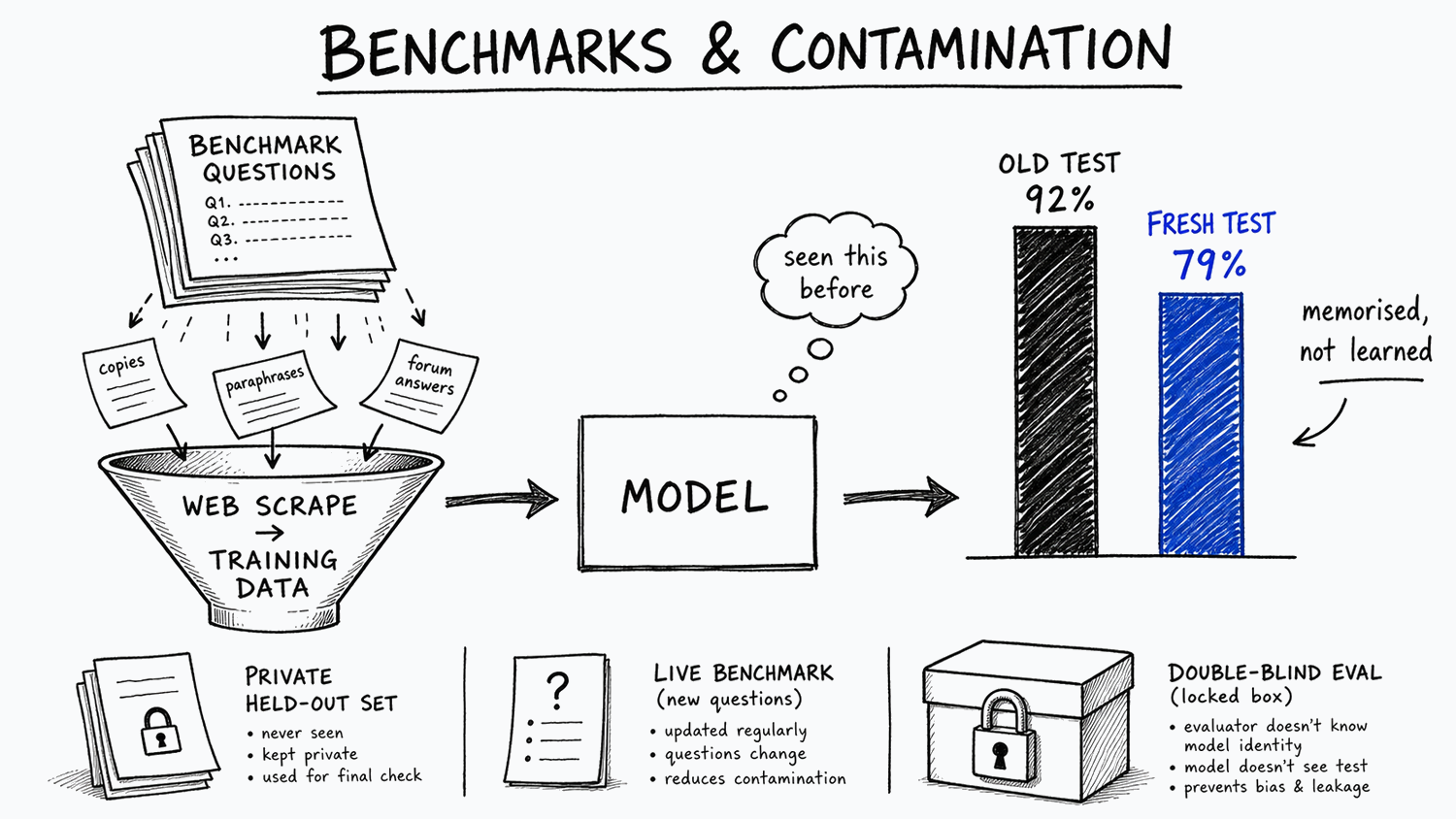
Benchmarks and contamination

Hand-drawn diagram titled 'Benchmarks & Contamination': benchmark question sheets leak as copies, paraphrases, and forum answers into a web-scrape funnel feeding a model that thinks 'seen this before'; bars show 92% on the old test vs 79% on a fresh test, annotated 'memorised, not learned'; below, three defenses - private held-out set, live benchmark, and double-blind eval as a padlocked box.View full-size diagram ↗

What it is

A benchmark is a fixed exam for models - maths sets, coding tasks, multiple-choice tests - used to score and rank them. Contamination is when those exam questions, or close paraphrases of them, leak into a model's training data, so the model has effectively seen the test before sitting it. The score goes up; the capability it claims to measure does not.

How it works

Benchmarks live on the public web - repos, blog posts, forum threads discussing answers - and web-scale training scrapes ingest them. Exact questions get memorized; paraphrases slip past exact-match filters. Labs also iterate against public leaderboards, slowly overfitting, and old benchmarks saturate. Defenses: private held-out sets, freshly rewritten problem sets, and live benchmarks.

A concrete example

Scale AI hand-wrote GSM1k: 1,250 new grade-school maths problems matched to the popular GSM8K benchmark. Some models scored up to ~13 points lower on the fresh problems - the signature of partial memorisation - while frontier models barely moved. Google DeepMind's new pilot goes further, sealing external evals in a cryptographic box so neither side sees the other's data.

Why it matters

Builders choose models, negotiate contracts, and route traffic off leaderboard numbers. A contaminated score means the model you picked can be materially worse on your real workload than the number implied - which is why a small private eval built from your own tasks beats any public leaderboard for making a model decision.

What people get wrong: That contamination is deliberate cheating. Most of it is accidental: the benchmark was simply on the internet, and web-scale training data ingests it. That is also why it is hard to fix - exact-match decontamination cannot catch paraphrases, translations, or worked solutions discussed in forum threads.

Today's top 5

See the full wire feed →

Quick check

Was this issue useful?

Get Crabhaus in your inbox

A concise daily briefing on the AI developments worth understanding.