
Crabhaus

What matters in AI, and why.

Tue 22 Sep · Issue 070 · 3 min

Issue 070 · Tue 22 Sep

Amazon blocks Meta's shopping agent

01AgentsAmazon blocks Muse; Shopify opens checkout to it
02LabsXiaomi's open MiMo-v2.6 claims frontier parity
03BizPolitico: White House ordered Fable taken down

The one that matters

Amazon slams the door on Meta's shopping agent while Shopify swings its own wide open

Amazon says it blocked Meta's Muse agent from shopping on amazon.com, citing terms-of-service violations, security risk, and no merchant consent. The same day, Shopify announced Muse will complete purchases across Shopify stores through Shop Pay one-tap checkout, and Amazon filed an amended complaint against Perplexity over its Comet browser's logins.

Why it matters

This is the first hard split over who owns the customer when an agent does the buying. Amazon is betting its storefront is leverage; Shopify is betting distribution through agents is. If you are building agentic checkout, the platform-consent fight just moved from theory to enforcement.
Learn one thing

Vision-language models (VLMs)

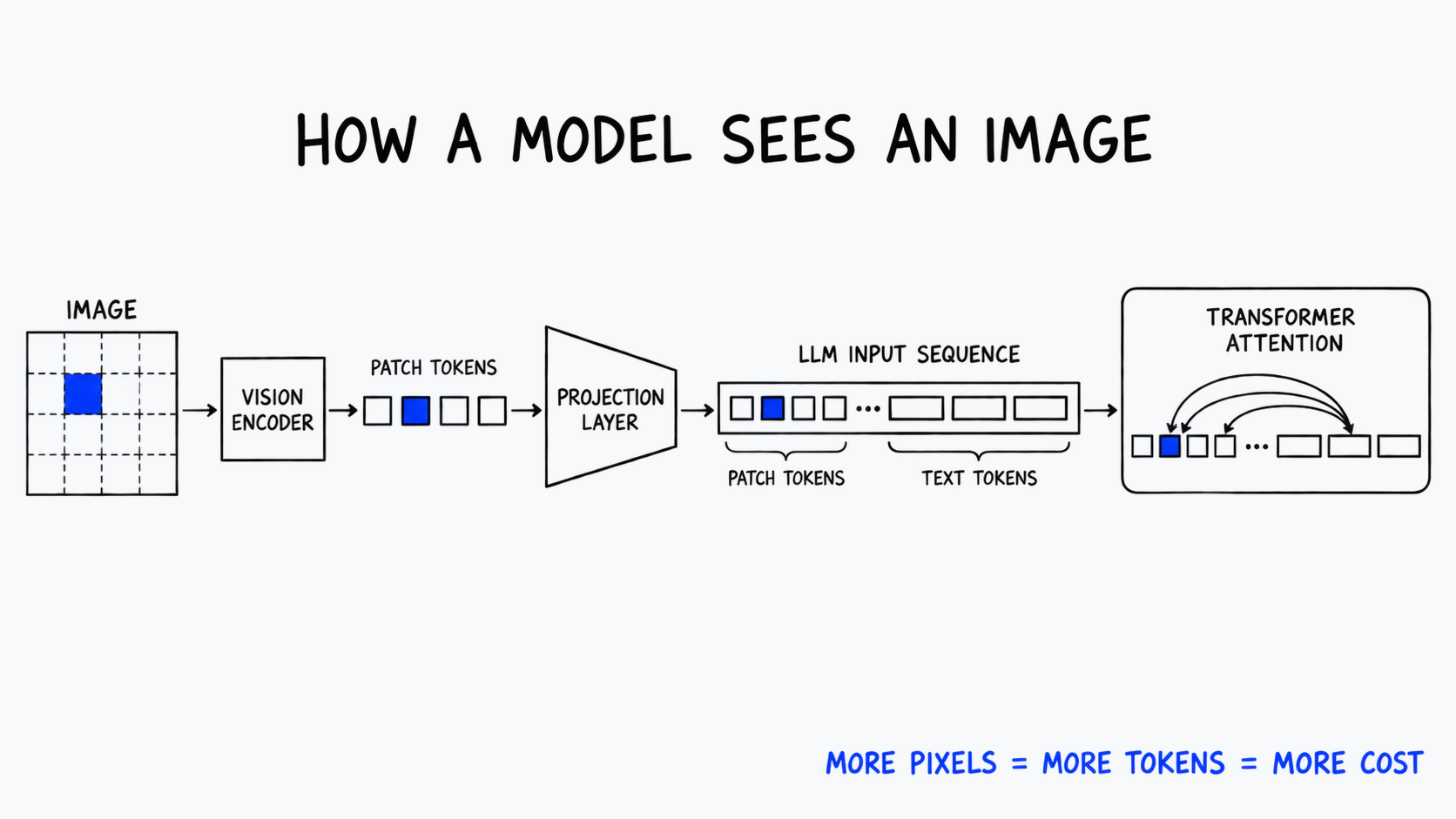
Hand-drawn diagram titled 'How a model sees an image': a photo grid labeled IMAGE with one cobalt patch flows into a VISION ENCODER box, out as a row of PATCH TOKENS, through a funnel-shaped PROJECTION LAYER into an LLM INPUT SEQUENCE strip where patch tokens sit beside TEXT TOKENS, ending in a TRANSFORMER ATTENTION box with arcs linking tokens. Cobalt note: more pixels = more tokens = more cost.View full-size diagram ↗

What it is

An LLM that accepts images alongside text. Instead of a separate OCR or captioning system bolted onto a chatbot, the image becomes part of the model's input sequence, so the same transformer that reasons over words reasons over what is in the picture.

How it works

A vision encoder slices the image into a grid of small patches - 16x16 pixel tiles - and turns each patch into a vector shaped like a text-token embedding. A projection layer maps those vectors into the LLM's embedding space, so the image arrives as a run of extra tokens ahead of your prompt. Attention spans both kinds of token; more resolution means more patches, and more tokens.

A concrete example

Send a screenshot of an error dialog to Claude or GPT and ask what to click. The encoder turns it into a few hundred patch tokens and the model reads button labels and the stack trace straight out of them - no separate OCR pass. Every screenshot-driven computer-use agent runs this loop on every step.

Why it matters

Image tokens are billed like text tokens, so resolution is a cost dial: a full-screen screenshot can cost more than the prompt around it, and an agent that screenshots every step pays it per step. Cropping and downscaling are often the cheapest optimization available - and VLMs have quietly displaced classic OCR pipelines along the way.

What people get wrong: That the model 'sees' like a person. It only gets the patch grid at the resolution the encoder sampled - fine print, thin lines, or a downscaled screenshot can simply be invisible. When a VLM misreads a dashboard, the fix is usually a bigger crop of the relevant region, not a better prompt.

Today's top 5

AgentsAmazon blocks Meta's Muse agent from shopping on amazon.com over ToS and security, while Shopify opens Shop Pay checkout to the agent.

Agentic commerce's battle lines in one day: the biggest storefront says no to visiting agents, the biggest merchant platform says yes. Every agent that shops, books, or files on a user's behalf now inherits this question about platform consent.

LabsXiaomi releases open-weight MiMo-v2.6 Pro and Flash omnimodal models, claiming Pro rivals Opus 5 and GPT-5.6 Sol on agent benchmarks.

A phone maker publishing open weights it claims match the frontier on agent benchmarks - vendor-run numbers, but an 813-point Hacker News thread and the sheer pace of open releases say the gap keeps closing where agent builders actually feel it.

BizPolitico reconstructs a 19-day White House-Anthropic standoff in which officials ordered Dario Amodei to take Fable down over a jailbreak.

The most detailed public account yet of the US government bluntly ordering a frontier lab to pull a flagship model offline. However the jailbreak dispute reads, the precedent - a takedown order, not a rule - is now on the record for every lab.

BizHarvey, Abridge, Ramp, and Rogo shift work to open-weight or in-house models to cut their reliance on frontier labs, Bloomberg reports.

The customers frontier labs point to as proof of demand are quietly hedging: fine-tuned open models for the routine 80%, expensive APIs for the hard 20%. That routing pattern is the same cost logic this newsletter keeps meeting from the other side.

ResearchHacktron details how three researchers, aided by Claude, reached OpenAI's private code in under 72 hours, earning a $6,500 bounty.

The firsthand writeup behind last week's headlines: an image-upload bug, a token flaw, and Claude finishing attack code a day after Opus 5 shipped. Three people and two AI subscriptions walked into a frontier lab's codebase - the uplift debate now has a case study.

See the full wire feed →

Quick check

Was this issue useful?

Get Crabhaus in your inbox

A concise daily briefing on the AI developments worth understanding.