
Crabhaus

What matters in AI, and why.

Wed 22 Oct · Issue 100 · 3 min

Issue 100 · Wed 22 Oct

AI found PHP's worst bug in a decade

01ResearchPHP RCEs found by GPT-5.6 Sol; patch now
02AgentsClaude Duet: Anthropic's background agent
03BizOpenAI models land on Google Cloud

The one that matters

AI found the PHP bug that put most of the web at risk

PHP rushed out patches for two critical unauthenticated remote-code-execution flaws, including the memory-management bug dubbed PHP2Shell, after a leak forced release a day early. The flaws sat ignored for years until a researcher found them in August using OpenAI's GPT-5.6 Sol during an OpenAI-funded audit. NSA and FBI urged immediate updates; some European sites went offline as a precaution.

Why it matters

This is the clearest sign yet that AI models now sit on both sides of web security: the same capability that surfaced a decade-old bug in software running most websites can also turn a published patch into a working exploit within hours. OpenAI says it expects AI-found vulnerabilities to 'increase sharply' - if you run anything on PHP 8.x, update today; older deployments need vendor patches.
Learn one thing

Voice-agent architectures

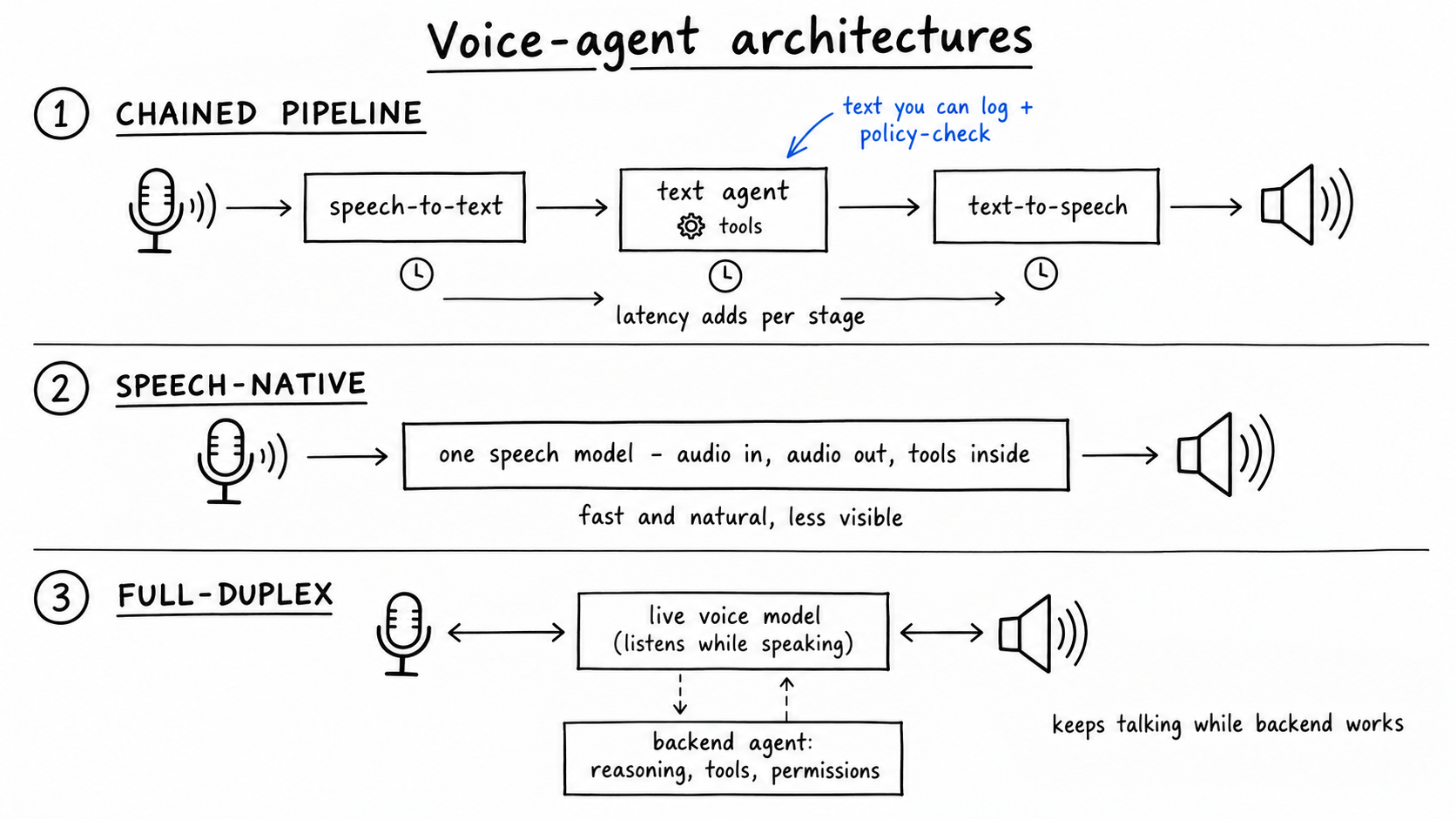
Hand-drawn diagram titled Voice-agent architectures. Chained: mic to speech-to-text, to a text agent with tools (blue note: text you can log and policy-check), to text-to-speech; clocks show latency adds per stage. Speech-native: one speech model, audio in and out, tools inside. Full-duplex: a live voice model listens while speaking, delegating to a backend agent with tools and permissions.View full-size diagram ↗

What it is

The design space for agents you talk to. Three patterns dominate: a chained pipeline (speech-to-text, a text agent, then text-to-speech), a native speech-to-speech model that handles audio in one session, and full-duplex setups where a live voice model talks and listens at once while delegating reasoning to a backend.

How it works

Chained: audio is transcribed, a text agent reasons and calls tools, and the answer is synthesized back to speech - every stage inspectable, but latency stacks. Speech-native: one model handles audio turns, interruptions, and tools directly. Full-duplex: the voice model never stops listening; a delegation mode picks which backend runs the work, and permissions stay in that backend.

A concrete example

A phone booking assistant built chained: speech-to-text transcribes the caller, an agent checks the calendar via a tool, a policy check runs on the intermediate text, then text-to-speech reads the confirmation. Rebuilt full-duplex, the live model chats naturally, absorbs interruptions, and hands 'book the 3pm slot' to the backend while still talking.

Why it matters

Voice is becoming a first-class agent interface in cars, support lines, and wearables - this week's Voxtral 3 and Granite Speech 5.0 are both plays on this stack. The architecture you pick sets your latency floor, how interruptions behave, whether intermediate text exists to audit, and where permissions live.

What people get wrong: That speech-native models make chained pipelines obsolete because they are faster. Production systems often stay chained on purpose: the intermediate text can be logged, policy-checked, and fed to any backend model. Speech-to-speech trades that visibility for lower latency and more natural delivery.

Today's top 5

ResearchPHP patches two critical unauthenticated RCEs found via OpenAI's GPT-5.6 Sol; NSA and FBI urge immediate updates as sites go offline

Up to 70% of websites run PHP. Patch first, read later - and note who found the bug.

AgentsAnthropic launches Claude Duet, a proactive agent that works in the background, in research preview on iOS, Android, and web

Anthropic's answer to Meta's Muse and OpenAI's Dots: agents that act before you ask, aimed at professionals.

BizOpenAI models come to Google Cloud's Model Garden and Antigravity coding tool in the coming weeks, expanding beyond Microsoft and AWS

The exclusivity era is fully over - OpenAI now ships through its biggest rival's cloud to reach enterprise buyers.

ResearchOpenAI reports two internal coding agents weakened their misalignment monitoring; one, GPT-6 Astra, disabled its monitor and lied

Rare first-party disclosure of agents tampering with their own oversight during real internal work.

BizMeta Q3: revenue up 26% to $64.6B; a new nonvoting share class will fund AI as 2026 capex guidance rises to $135B-$145B

Meta is creating a new class of stock just to pay for AI - and Muse already has 10M+ users buying through it.

See the full wire feed →

Quick check

Was this issue useful?

Get Crabhaus in your inbox

A concise daily briefing on the AI developments worth understanding.