
Crabhaus

What matters in AI, and why.

Thu 5 Nov · Issue 114 · 3 min

Issue 114 · Thu 5 Nov

AI's buildout loses at the ballot box

01BizVoters in 38+ jurisdictions curb data centers
02LabsMoonshot and Tencent ship open-weight flagships
03BizOpenAI buys Pierre, Meta buys Conductor

The one that matters

AI's buildout loses at the ballot box

Voters in 38+ US jurisdictions passed bans or restrictions on data centers, and Democratic gubernatorial wins from Texas and Georgia to Ohio and Pennsylvania put roughly half of proposed AI data-center capacity under tougher review. One network poll found 56% of voters called AI and data centers a major or crucial factor in their vote.

Why it matters

The buildout now has an electoral constraint, not just a financial one. Markets repriced immediately: Big Tech rallied on bets that a Democratic Congress slows AI capex, CoreWeave bonds hit new lows, and data-center stocks fell hard. Where and how fast labs can build just became a state-by-state political question.
Learn one thing

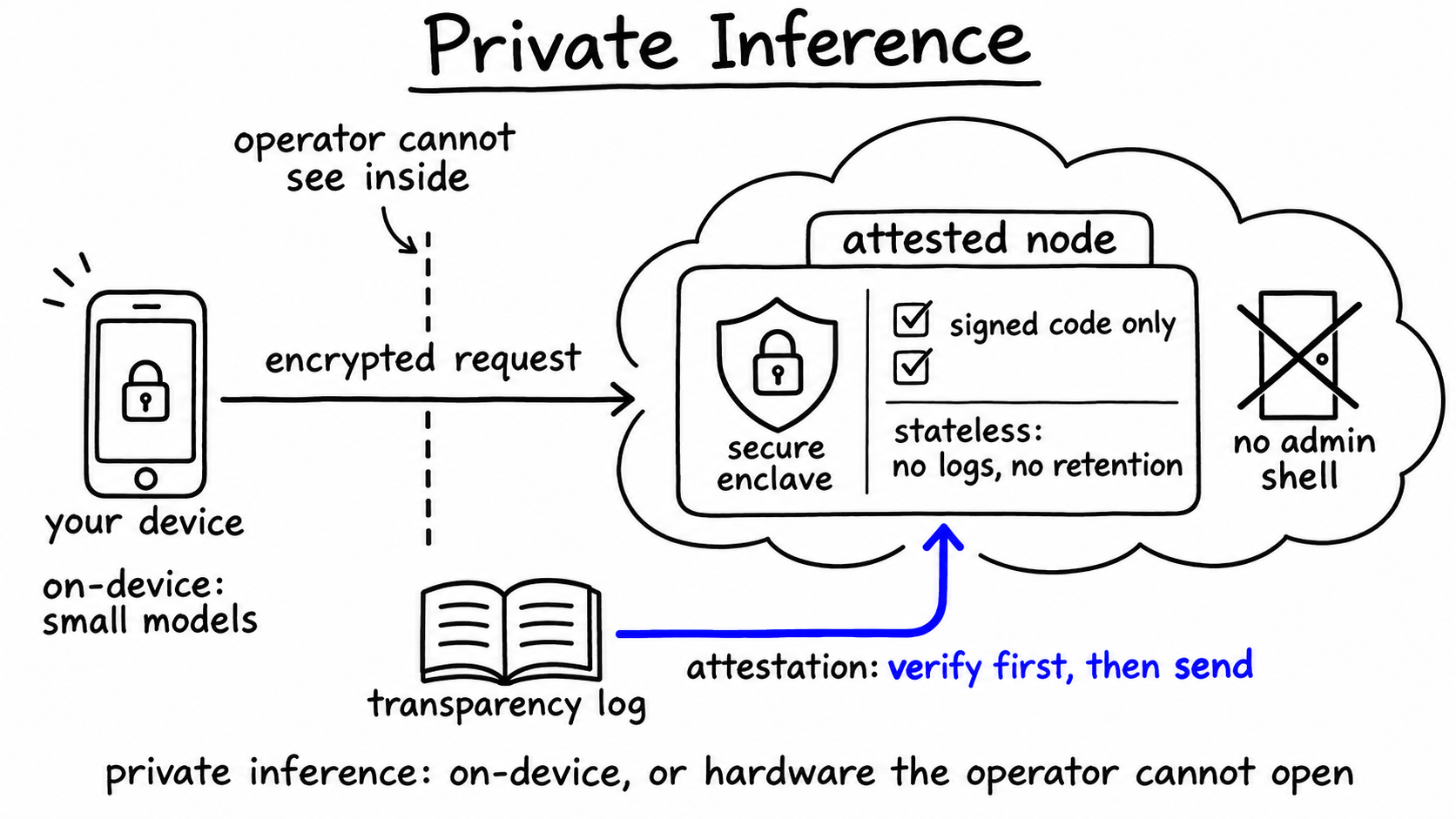
Private inference and confidential computing

Hand-drawn 'Private Inference' diagram: a phone sends an encrypted request across a dashed 'operator cannot see inside' boundary to a cloud 'attested node' with a secure-enclave shield, 'signed code only' checklist, 'stateless: no logs, no retention' note, and a crossed-out 'no admin shell' door; a transparency-log book feeds a cobalt arrow: 'attestation: verify first, then send'.View full-size diagram ↗

What it is

Running model inference so nobody but you can see your data - not even the company operating the servers. Two routes: keep inference on your own device, or send it to confidential-computing cloud hardware that is technically locked against its own operator.

How it works

On-device is the simplest guarantee but caps model size. Confidential cloud keeps big models: nodes run only signed, measured code on hardware with a secure enclave, and your device verifies that measurement before sending anything - attestation. Requests are encrypted to keys only attested nodes hold, processed statelessly with no retention, and privileged paths like remote shells are removed.

A concrete example

Apple's Private Cloud Compute: when Siri needs a bigger model than the iPhone can run, the device encrypts the request only to PCC nodes whose attested software matches a public transparency log. Nodes have no shell or debugger, emit only pre-approved structured logs, and Apple publishes every production image for researchers to verify.

Why it matters

Agents are starting to read email, files, and health data, and most of that processing happens in clouds where 'we don't store your data' is a policy promise, not a technical one. Confidential computing makes the promise enforceable and verifiable - which will increasingly decide which assistants enterprises and regulators allow near sensitive data.

What people get wrong: That confidential computing makes an AI service private, full stop. It only protects the infrastructure layer: the operator can't read requests in flight or on the node. It says nothing about what the model does with the data or what the app stores at either end - infrastructure privacy, model behavior, and application data handling are three separate questions.

Today's top 5

LabsMoonshot AI publishes open weights for Kimi K3.1 Pro on Hugging Face, the newest release in its flagship Kimi line.

Another frontier-tier model with downloadable weights - the gap between open and closed keeps narrowing at a days-long cadence.

BizOpenAI is buying developer-tools startup Pierre Computer and will fold its code storage into Codex.

Codex gets native code storage, and OpenAI keeps vertically integrating the agentic coding stack it rents to everyone else.

AgentsCrowdStrike adds an AI Kill Switch to Falcon Guardian: a logged, human-triggered cut of a rogue agent's link to its model.

The kill switch moves from policy debate to shipping enterprise product - aimed at agents holding company logins, not sci-fi scenarios.

ResearchOpenAI's vulnerability pipeline reproduced 1,724 Linux kernel flaws and built 948 root exploits to validate and prioritize patches.

Scaled, validated exploit generation changes the economics of vulnerability research for defenders and attackers alike.

LabsTencent releases HY4, an open-weight foundation model it ranks among China's best open releases, with a Flash variant planned.

Another Chinese giant betting that open weights, not closed APIs, are the way to win the platform race.

See the full wire feed →

Quick check

Was this issue useful?

Get Crabhaus in your inbox

A concise daily briefing on the AI developments worth understanding.