
Crabhaus

What matters in AI & agents, and what to do with it.

Thu 12 Nov ยท Issue 121 ยท 3 min read

Today in AI

Nvidia's board met on Wednesday to decide whether to fire Jensen Huang.

Nvidia's board moves to fire CEO Jensen Huang

  1. In practiceUnited Airlines blocks AI assistants from booking flights
  2. In practiceAmazon released a tool coded entirely by AI
  3. BusinessInvestor demand for Anthropic's listing far exceeds supply

200+

Number of the day

Amazon cloud services the free emulator imitates locally, all code written by AI agents AWS Emulator on GitHub โ†—

Today's news

Business

Nvidia's board prepares to oust Jensen Huang

The Wall Street Journal reports the board met Wednesday to decide the CEO's future and is weighing replacements, including a temporary chief. The stock fell more than 7% after hours, days after Huang admitted an affair with an alleged Chinese agent.

Why it matters to you

Nvidia's chips sit under nearly every AI product your team uses, so a leadership crisis can ripple through chip supply, prices and tech-heavy funds. Expect volatile headlines; wait for the board's decision before acting.
Also today

In practiceUnited Airlines will block personal AI assistants from booking flights

A first test of whether companies accept AI agents as customers.

In practiceAWS shipped a free cloud emulator written entirely by AI agents

Agent-written software now ships from a major vendor, unreviewed by humans.

A commenter reading the security docs notes the emulator will not test IAM permissions, bucket policies or key policies: it proves logic, not access control. (scriptsmith, reader on Hacker News)

BusinessAnthropic's stock listing is many times oversubscribed before its debut

Hot demand means a rich price and higher expectations for Claude's maker.

Try this at work

Turn a messy email thread into a decision log

Long threads bury who agreed to what.

Here is an email thread. List: 1) decisions and who made them, 2) action items with owner and deadline, 3) open questions nobody answered. Quote the exact sentence behind each decision so I can verify.

Watch out: The model fills gaps confidently; check each quoted sentence exists before forwarding.

Explained like you're busy

How to read an AI vendor's benchmark claims

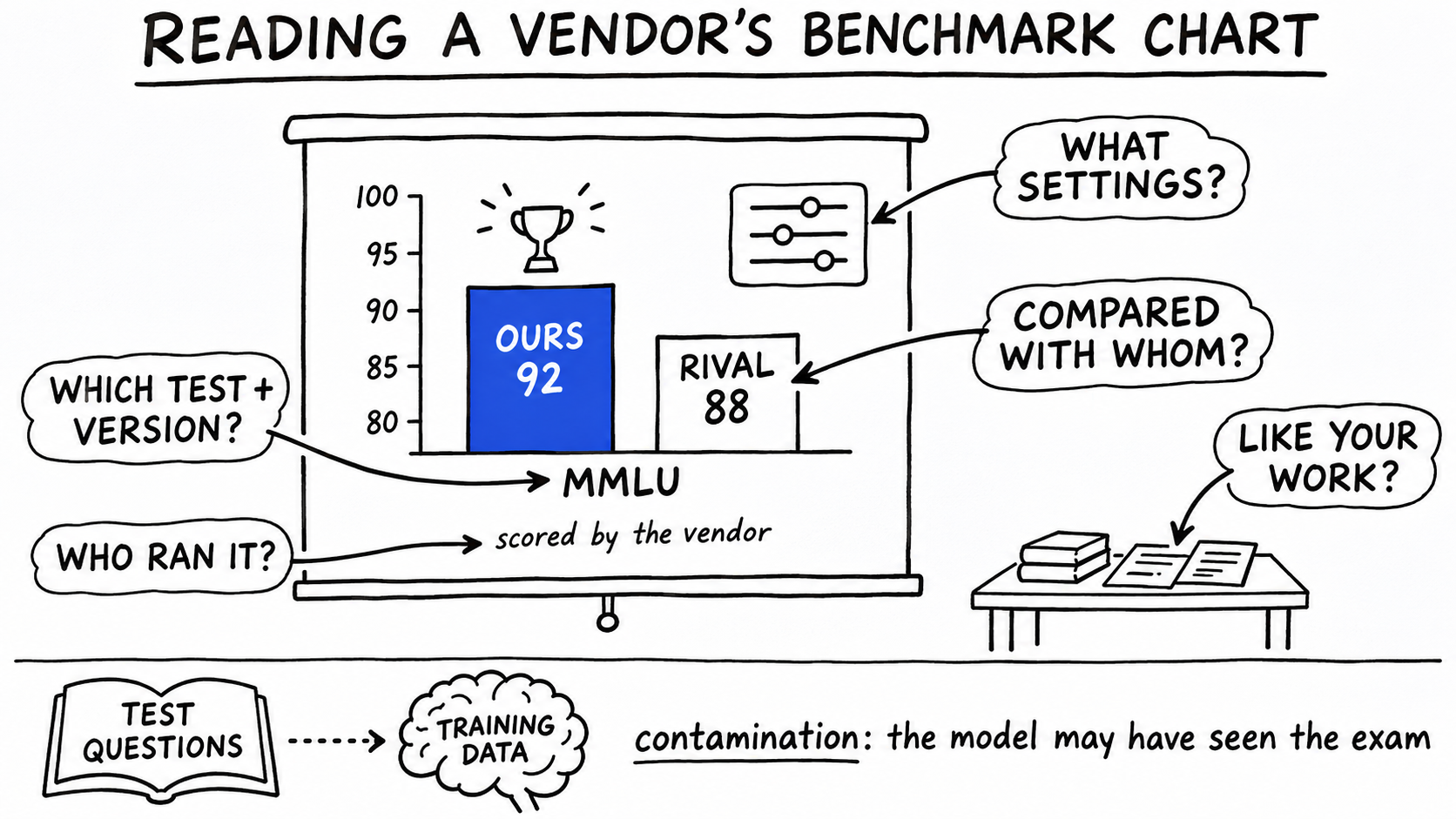
The recipe. Treat a launch chart like a report card the student wrote at home. Five questions decide if it counts: which test and version, who ran it, what settings, against which rivals, and does the task look like your work.

When to use it. Before picking a tool off a benchmark chart, send the five questions to the vendor. If answers are vague, trust independent scores run under disclosed settings, and trial the tool on your own tasks before committing budget.

What goes wrong. Benchmark scores look like lab measurements but are not: formatting changes alone can shift a score by about 5 percent, labs use different helpers, and test questions leak into training data, so a model may have seen the exam.

Hand-drawn diagram of a vendor benchmark chart with five labelled questions pointing at it: which test and version, who ran it, under what settings, compared with which models, and does the task resemble your work (opens the full-size diagram)
Full explainer ยท 3 min

What it is

A five-question checklist for judging the benchmark chart in an AI product launch: which test and version was used, who ran it, under what settings, against which rivals, and whether the task resembles your work. The questions separate a real capability gain from a number chosen to look good on a slide.

How it works

Whoever runs a benchmark controls every knob, so ask five questions. Which test and version: scores on different versions are not comparable. Who ran it: vendors publish their best run; independent reruns often land lower. What settings: Anthropic found trivial formatting changes can shift a multiple-choice score by about 5 percent. Compared with which models: charts often pick older or weaker rivals. Does the task resemble yours: a coding score says little about contract review. And popular test questions leak into training data, so a model may have seen the exam.

A concrete example

Suppose a launch post says: our model scores 92 on MMLU, the leading rival scores 88. MMLU is a widely used multiple-choice exam, which also means its questions circulate in training data. The chart does not say who ran the rival's test, with how many worked examples, or on which variant. Anthropic has reported finding mislabeled and unanswerable questions in MMLU itself. The honest reading: the vendor beat one number it chose, under conditions it chose. The useful follow-up is an independent score under disclosed settings, or better, a one-day trial on your own tasks.

Why it matters

Teams choose tools and justify budgets with these charts. This week an independent tester reported that Meta's new small model matches a bigger rival's benchmark score while declining most factual questions it is unsure of, a trade-off no launch chart shows. Asking the five questions turns a vendor's chart from a sales slide into evidence you can weigh, and tells you when the only honest answer is to run the tool on your own work before anyone commits money.

Your turn

Do you trust AI vendors' benchmark charts?

No votes yet on yesterday's question: Would you let an AI assistant spend your money?

One question: Would you let an AI assistant book your next flight? Reply to today's email to answer.