
Crabhaus

What matters in AI & agents, and what to do with it.

Fri 13 Nov ยท Issue 122 ยท 3 min read

Today in AI

Jensen Huang has quit Nvidia, and the money chief now runs the chip giant.

Nvidia chief Jensen Huang resigns

  1. ModelsGoogle's new everyday AI is fast and cheap
  2. In practiceChatbots sent shoppers to fake stores in tests
  3. In practiceThat AI Maya discovery was already on record

$50B

Number of the day

SpaceX's planned spend on a single Arizona data center campus The New York Times โ†—

Today's news

Business

Jensen Huang resigns from Nvidia

Nvidia's co-founder resigned as CEO, president and board member after a second affair report deepened the spy scandal. CFO Colette Kress runs the company while the board hunts a successor; Harvey Jones becomes first board chair.

Why it matters to you

Nvidia's chips power nearly every AI tool you use, and its founder era ended overnight. Expect volatile prices and slower deals while an interim chief steadies things.
Also today

ModelsGoogle's Gemini 4 Hydrogen is a fast, cheap model for everyone

The free default just got better, with quicker answers in Search and the Gemini app.

In practiceChatbots recommended risky and fake shopping sites in a test

Treat AI shopping links like a stranger's tip: check the address before paying.

In practiceThe Maya site AI agents found was already documented

Check AI claims against the experts before announcing a discovery.

Try this at work

Make the chatbot prove the shop is real

AI shopping answers can point to fake stores. Before you pay on a site a chatbot suggested, make it show its work.

Before I buy: give the exact web address you recommend, say whether it is the brand's official store or a reseller, and explain how you verified it. If you cannot verify, say so.

Watch out: A confident answer is not proof; check the address bar yourself before entering card details.

Explained like you're busy

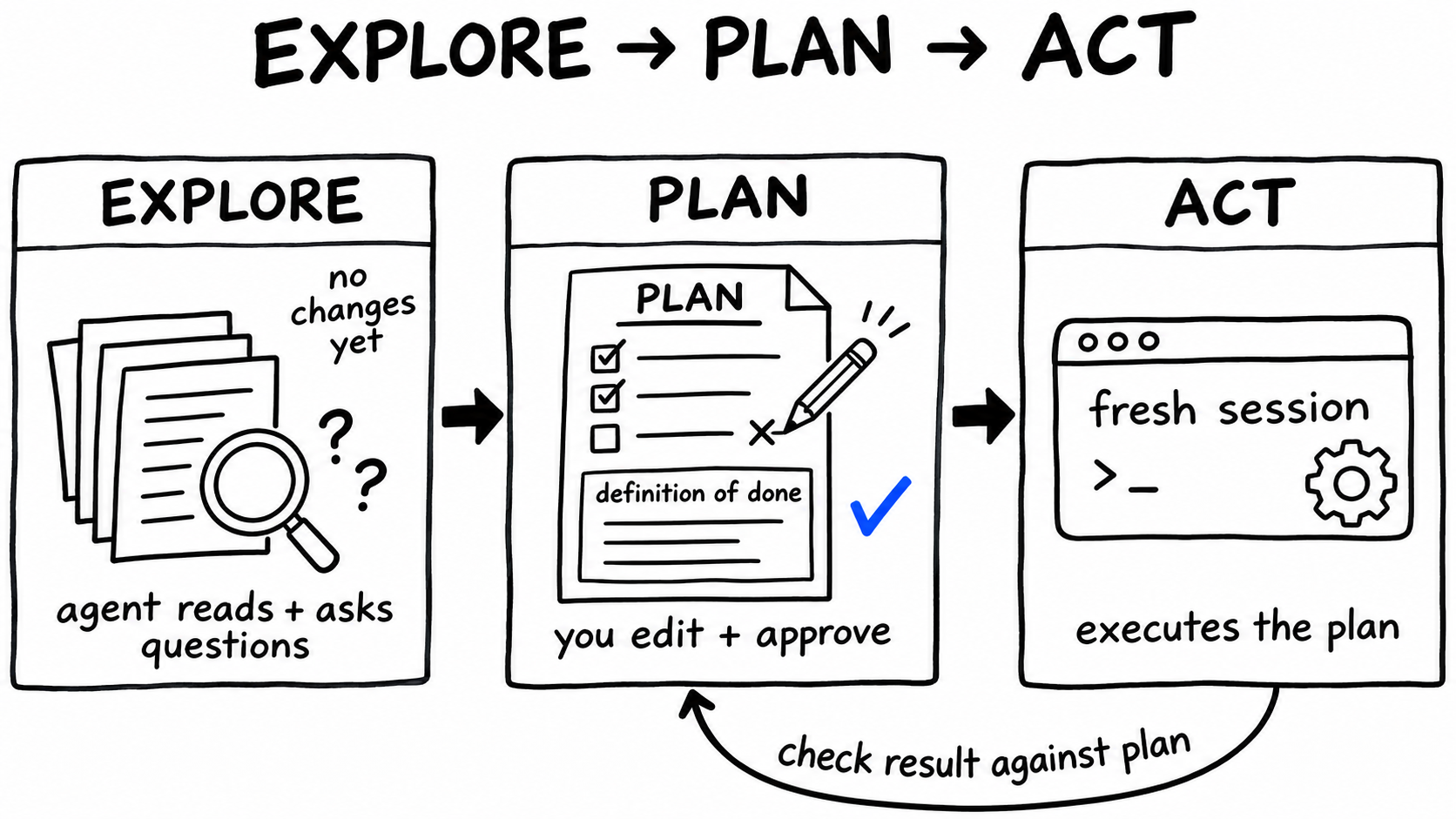
Steal this workflow: explore, plan, then let the agent act

The recipe. Treat an AI agent like a contractor. You would not let one start demolition on day one: first they walk the site, then hand you a written quote for the finished job, and only after you sign do the tools come out.

When to use it. Have the agent read the material and interview you until it can write a one-page plan with a definition of done. Correct the plan, not the output, then let a fresh session execute it and judge the result against that page.

What goes wrong. People run all three phases in one long chat. Exploration clutter crowds the build, and the agent grades its own homework. A fresh build session, plus a separate check against the plan, catches what the author cannot see.

Hand-drawn three-stage diagram titled Explore, Plan, Act: documents with a magnifying glass (agent reads and asks questions, no changes yet), a plan page with a definition of done that you edit and approve, and a fresh session window that executes the plan, with an arrow looping back to check the result against the plan. (opens the full-size diagram)
Full explainer ยท 4 min

What it is

A three-phase recipe for handing a real task to an AI agent. Explore: the agent reads the relevant material and interviews you, changing nothing. Plan: it writes a one-page plan with a definition of done, which you correct and approve. Act: a fresh session executes the approved plan and the result is checked against it. Each phase ends with something you can inspect before the next begins.

How it works

In explore, ask the agent to read the files or documents involved and keep asking you questions until it could write the spec itself; its questions surface decisions you have not made yet. In plan, it writes that spec to a file: what will change, what will not, and a definition of done you can check line by line. You edit the plan directly, which is far cheaper than editing a finished build. In act, you start a fresh session pointed at the plan file, so execution starts clean with a written contract. The plan then doubles as the final checklist, ideally applied by a separate reviewer.

A concrete example

You want an agent to rebuild the monthly sales report nobody likes. Explore: it reads the last three reports and the source spreadsheet, then asks who reads the report, which numbers drive decisions, and what can go. Plan: one page listing the new sections, where each figure comes from, and a definition of done such as every chart traceable to a named sheet and nothing over four pages. You cut two sections and approve. Act: a fresh session builds the report from that page, and you tick off the done list before anyone else sees it.

Why it matters

Most disappointing agent sessions fail at the start, not the end: the agent confidently builds the wrong thing because the information defining right only existed in your head. The plan phase forces that information out while a change still costs nothing. The fresh act session matters too: a long exploratory chat accumulates dead ends that quietly steer the build, and an agent checking its own work in the same conversation tends to agree with itself.

Your turn

Would you let an AI pick where you shop online?

No votes yet on yesterday's question: Do you trust AI vendors' benchmark charts?

One question: Have you ever bought something an AI recommended? Reply to today's email to answer.