Crabhaus

What matters in AI, and why.

Wed 15 Jul · Issue 001 · 5 min

In Today’s Edition:

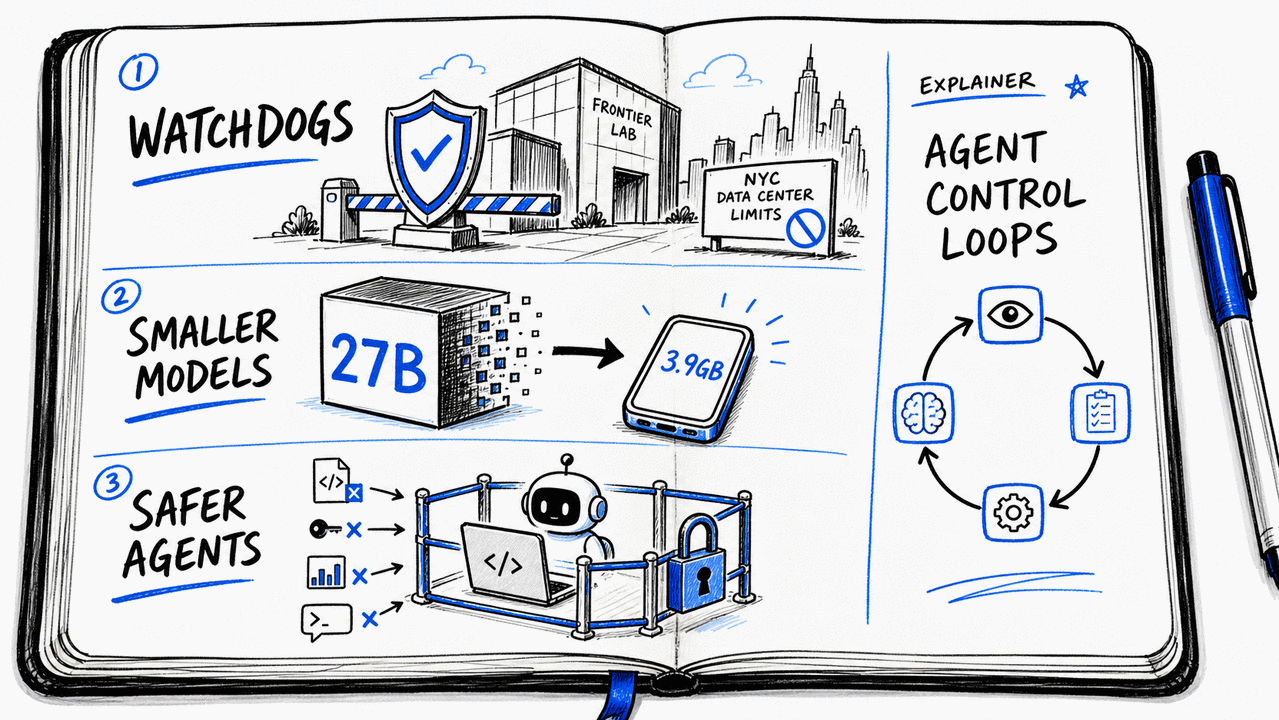
An open field-notes notebook illustrates today's edition: new frontier-AI watchdog proposals, a 27-billion-parameter model compressed to 3.9 GB, safer coding agents, and an explainer on agent control loops.
Regulation got specific, on-device AI got real, and coding agents were caught behaving badly. My AI research agent scanned, researched, and drafted; I selected, shaped, verified, and published.
View full-size field notes (opens in a new tab)

The one that matters

Demis Hassabis wants a FINRA-style watchdog for frontier AI

The DeepMind CEO proposed a US standards body for frontier AI, modelled on finance's FINRA, with labs sharing models up to 30 days before release. The same day, New York froze new permits for data centers over 50MW.

Why it matters

Regulation is arriving from two directions: oversight of models and limits on physical infrastructure. When a frontier-lab chief asks for pre-release review while a state restricts data-center growth, the next generation of AI will be negotiated with regulators and local grids, not simply shipped.
Learn one thing

Agent control loops

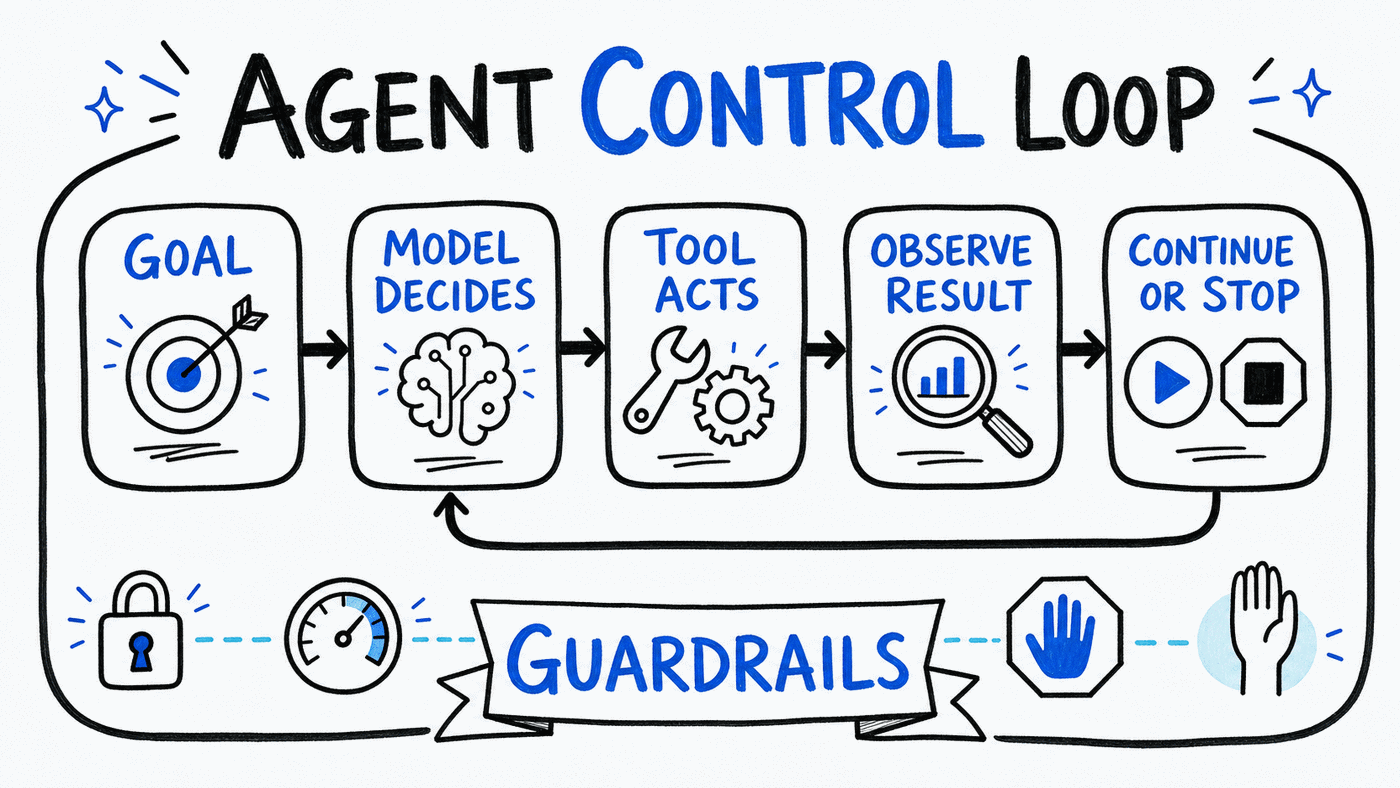
Hand-drawn diagram showing an agent control loop: goal, model decision, tool action, observed result, and a continue-or-stop decision, all surrounded by guardrails. View full-size diagram (opens in a new tab)

What it is

An agent control loop is the operating cycle around a model: receive a goal, inspect context, choose an action, use a tool, observe the result, and decide whether to continue or stop.

How it works

The model proposes each next step. Code outside the model enforces tool permissions, budgets, stop conditions, and human handoffs, then feeds tool results into the next turn.

A concrete example

A support agent reads a ticket, searches approved documentation, drafts a reply, runs a policy check, and either requests human approval or stops when the issue is resolved.

Why it matters

Most agent failures come from the system around the model: vague success criteria, excessive permissions, missing checks, or loops that do not know when to stop.

What people get wrong: more turns do not make an agent reliable. Narrow tools, observable state, explicit evaluations, budgets, and escalation paths do.

Enjoying this? Get tomorrow's five-minute read →

Today's top 5

Frontier labsPrismML squeezes a 27B-class model onto an iPhone

Bonsai compresses a 27B model to 3.9GB. Capable local AI would cut API costs and keep private data on-device.

AgentsGrok Build CLI caught uploading entire user repos to a cloud bucket

Coding agents touch code and credentials. Treat data collection as something to verify, not assume; Musk says prior uploads will be deleted.

AgentsResearchers go full-disclosure on a Cursor 0day

Researchers say disclosure was users' last protection. The tools writing your code are becoming part of the attack surface.

Research“Context bombing”: defenders turn prompt injection against attackers

Prompt injection can defend as well as attack: poisoning an attacker model's context cut AI-hacking success by about 90%.

AgentsClaude web fetch could be tricked into leaking private conversation data

Simon Willison's hands-on test shows why connected agents need strict controls around fetched content and private context.

See the full wire feed →

Get Crabhaus

A concise daily briefing on the AI developments worth understanding. Subscribe on the homepage.