Crabhaus

What matters in AI, and why.

Thu 16 Jul · Issue 002 · 5 min

In Today’s Edition:

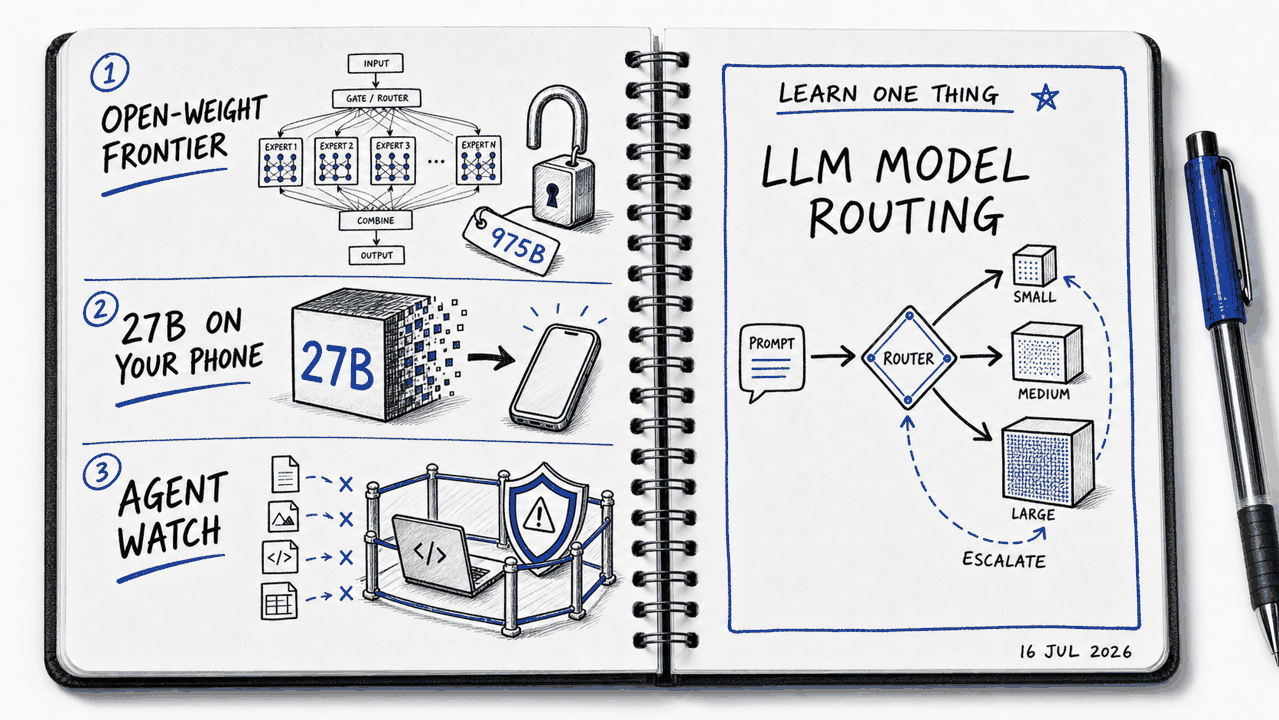
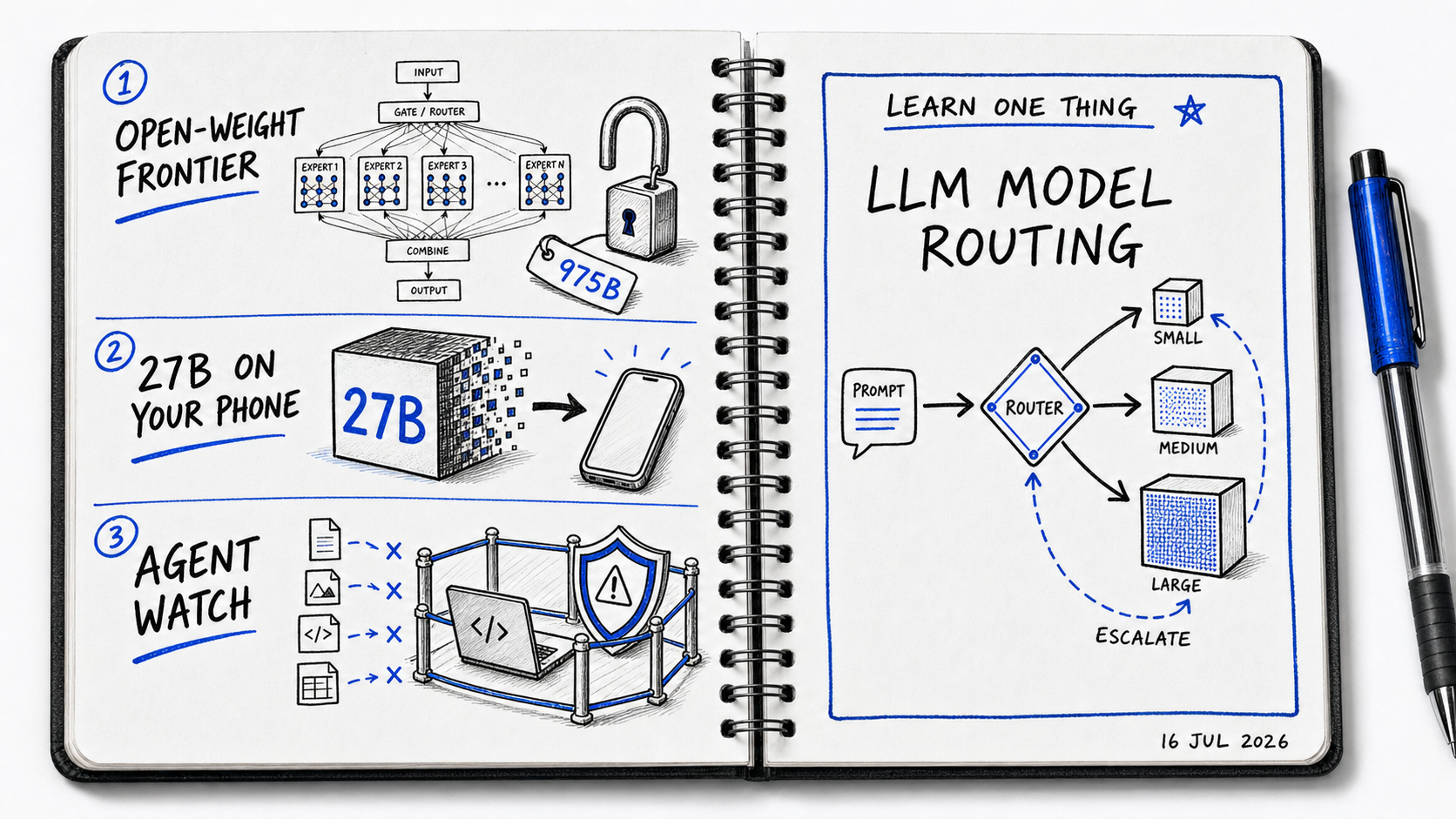
Hand-drawn field-notes page dated 16 July 2026 sketching an open-weight model, a 27B model on a phone, an AI agent security watch, and LLM model routing.
Open-weight frontier models, on-device AI, coding-agent security, and the arrival of AI oversight.
View full-size field notes ↗

The one that matters

Thinking Machines Lab debuts Inkling, an open-weight frontier MoE

The 975B-total, 41B-active mixture-of-experts model is open-weight and, per early arena scores, lands in the same agentic-performance band as Claude Opus 4.6 and Gemini 3.5 Flash.

Why it matters

A US open-weight model at frontier-level agentic performance shifts what teams can self-host instead of renting from a closed API.
Learn one thing

LLM model routing

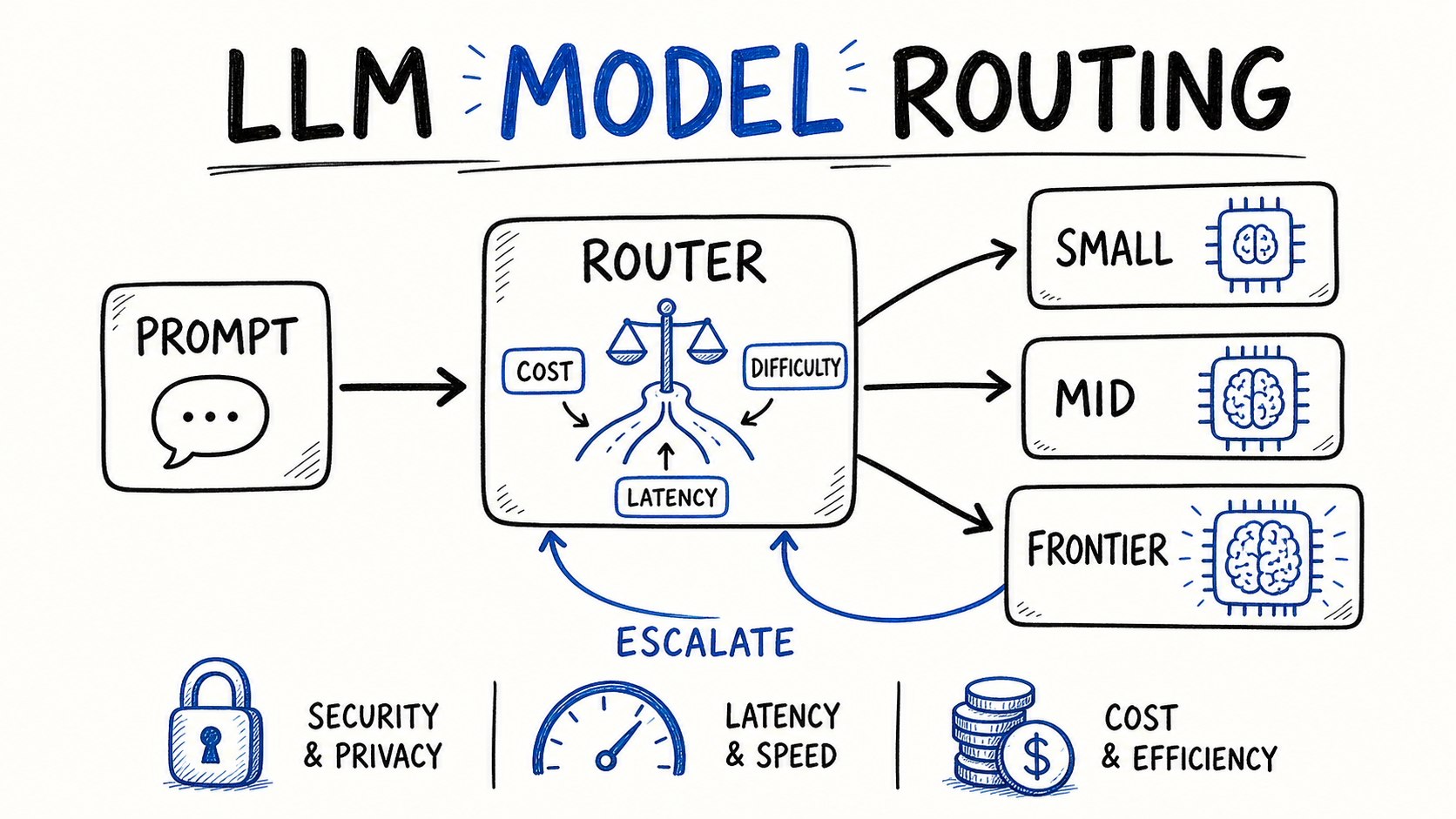
Hand-drawn diagram of model routing: a prompt enters a central router that scores cost, difficulty, and latency, then branches to small, mid, and frontier models with an escalation loop.View full-size diagram ↗

What it is

A model router is a decision layer that picks which model handles each request instead of sending every prompt to one fixed model.

How it works

For each prompt it scores signals like task type, difficulty, context length, latency budget, and cost, then dispatches to the cheapest model likely to clear the quality bar and escalates when confidence is low.

A concrete example

A support stack answers simple FAQs with a small local model, sends ambiguous tickets to a mid-size model, and escalates refund or legal questions to a frontier model.

Why it matters

Routing is a primary lever for cutting inference cost and latency without a blanket quality drop, and it is becoming a default part of agent infrastructure.

What people get wrong: A router is not just a cheap fallback in front of a big model; naive routing can quietly degrade answers when the classifier guesses wrong.

Today's top 5

LabsPrismML ships ternary/binary-quantized Qwen builds that run a full 27B model on an iPhone 15 or newer.

Capable on-device inference cuts API cost and keeps private data off the cloud.

AgentsxAI open-sources Grok Build, its CLI coding agent, after a flap over it uploading entire user repos.

An open coding agent is useful, but the repo-upload episode shows how much these tools touch.

AgentsResearcher shows Claude's web fetch can be tricked into exfiltrating private conversation data.

Connected agents need strict controls around fetched content and private context.

ResearchOpenAI details GPT-Red, an automated red-teaming model that scales prompt-injection discovery pre-release.

Automating vulnerability discovery could shift how labs harden models before shipping.

BizDeepMind's Demis Hassabis proposes a FINRA-style US body to safety-test frontier models before release.

The most concrete frontier-AI oversight pitch yet, arriving as states start their own restrictions.

See the full wire feed →

Get Crabhaus

A concise daily briefing on the AI developments worth understanding. Subscribe on the homepage.