Crabhaus

What matters in AI, and why.

Sun 19 Jul · Issue 005 · 4 min

Issue 005 · Sun 19 Jul

Inside today's edition

01BizCourt holds Google liable for its AI Overview
02LabsFable 5 joins Max and Team plans July 20
03AgentsGuide: let Claude Code run a spare Mac

The one that matters

Anthropic will bundle Fable 5 into all Max and Team Premium plans from July 20

From July 20, Fable 5 will be included in every Max and Team Premium plan at 50% of the usual limits, with Pro and Team Standard tiers getting access later.

Why it matters

It moves Anthropic's newest model from a paid add-on into the default premium bundle — a signal Fable 5 is now cheap enough to serve at scale, and a lever to keep power users on Claude.
Learn one thing

Tokens and tokenization

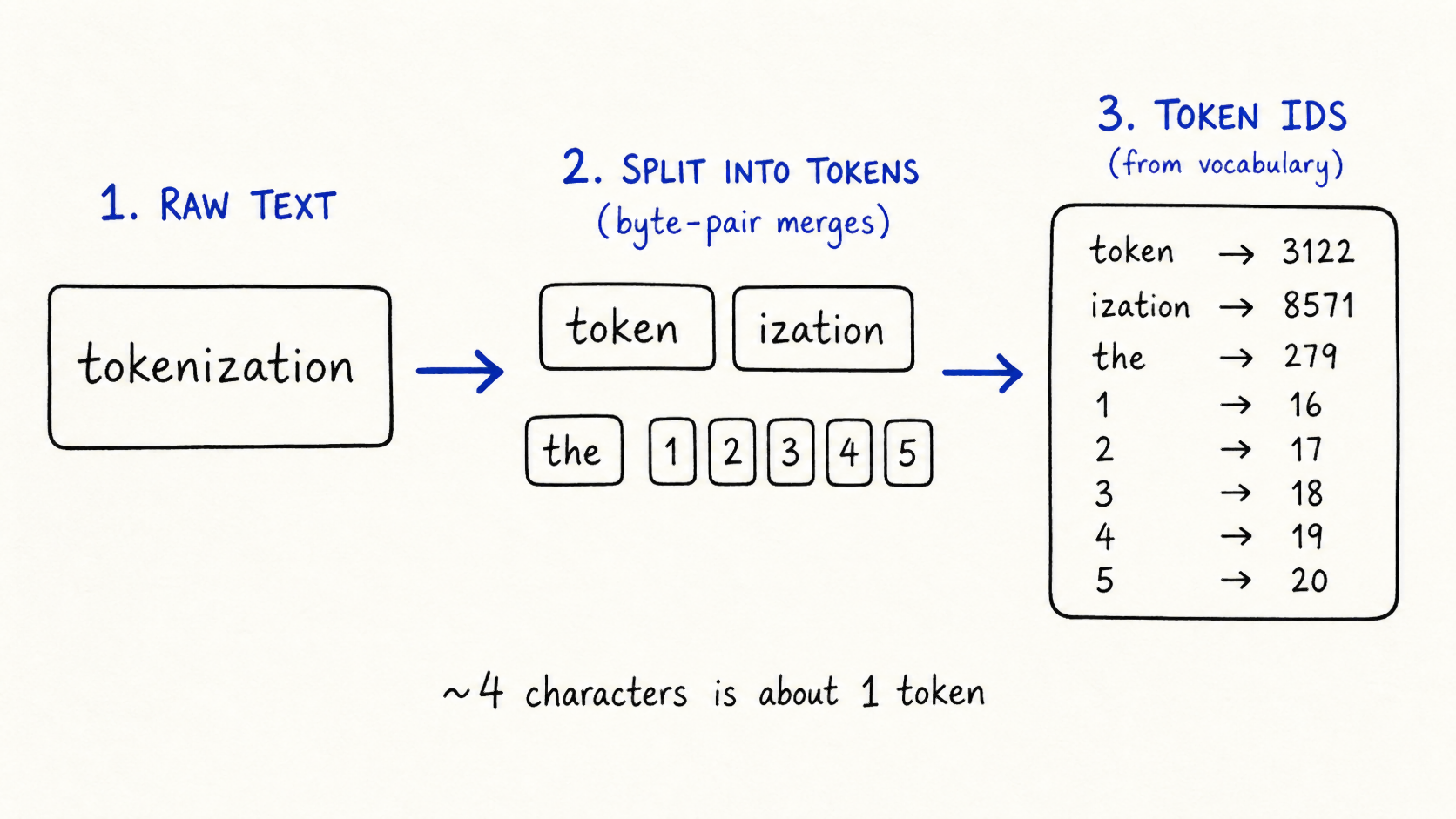
Hand-drawn three-stage diagram: the word 'tokenization' as RAW TEXT splits into the tokens 'token' and 'ization' (and 'the' plus digits 1-5) via byte-pair merges, then each token maps to an integer ID from a vocabulary; caption reads '~4 characters is about 1 token'.View full-size diagram ↗

What it is

A token is the atomic unit an LLM reads and writes: usually a chunk of characters (a short word, a word-piece, or even a single byte), not a whole word. Tokenization chops raw text into these units and maps each one to an integer ID drawn from a fixed vocabulary.

How it works

Most LLMs use byte-level Byte-Pair Encoding: training starts from raw bytes and repeatedly merges the most frequent adjacent pair into a new symbol, building a vocabulary of roughly 50k to 200k merges. At inference the same rules greedily form the longest known tokens, so common words become one token while rare words, code, or other languages split into many.

A concrete example

"tokenization" splits into "token" plus "ization" (two tokens) while "the" is one. A number like "12345" can break into digit-chunks, and an emoji or a non-English word may cost several tokens each. Rule of thumb: one English token averages about four characters, so roughly 750 words is near 1,000 tokens.

Why it matters

Tokens, not words, are the unit of billing, context windows, and rate limits: a 128k context is 128k tokens, and you pay per token in and out. Token boundaries also explain quirks like miscounting letters or spelling a word backwards, since the model never sees the characters inside a token.

What people get wrong: That one token equals one word, or that tokens are single characters. A token is a learned sub-word fragment, so word count only roughly predicts token count, and code, JSON, or non-Latin scripts can burn far more tokens per word than plain English.

Today's top 5

BizA Munich court found Google liable for defamatory claims its AI Overview generated about two publishers, ordering it to stop.

An early legal test of who is on the hook when a search engine's AI summary invents damaging claims about real people.

AgentsA step-by-step guide sets up a spare Mac for Claude Code to control directly, running autonomous local tasks on real hardware.

Points at where coding agents are heading: a dedicated machine the agent operates end to end, not just an editor plugin.

ResearchA hands-on writeup pits Fable 5 against GPT-5.6 Sol on an NP-hard task, testing whether an explicit /goal directive improves results.

Independent head-to-head evals on hard problems tell builders more than vendor benchmarks about which model to reach for.

BizNYC Mayor Mamdani said landlords can't secretly use AI-generated images to advertise rental properties, invoking disclosure rules.

A concrete local rule on AI-image disclosure, a preview of the consumer-protection fights coming to generative media.

LabsAn essay argues Moonshot's Kimi K3 marks an inflection for open-weights models closing in on the closed frontier.

Open-weights momentum is the story builders care about most: it decides whether self-hosting can rival frontier APIs.

See the full wire feed →

Get Crabhaus

A concise daily briefing on the AI developments worth understanding. Subscribe on the homepage.