Crabhaus

What matters in AI, and why.

Mon 20 Jul · Issue 006 · 4 min

Issue 006 · Mon 20 Jul

Inside today's edition

01LabsQwen3.8-Max-Preview trails only Fable 5
02BizAgentic AI breaches Hugging Face
03AgentsOpenAI trims Codex's context window

The one that matters

Alibaba's Qwen3.8-Max-Preview lands as open-weights close on the frontier

Alibaba unveiled a 2.4-trillion-parameter preview model it says trails only Fable 5, and promised an open-weight release soon, days after Moonshot's Kimi K3 and Zhipu's GLM-5.2.

Why it matters

It is the latest sign that Chinese open-weight models are closing on the closed frontier, which matters to any builder weighing self-hosting against frontier APIs on cost and control.
Learn one thing

Context windows

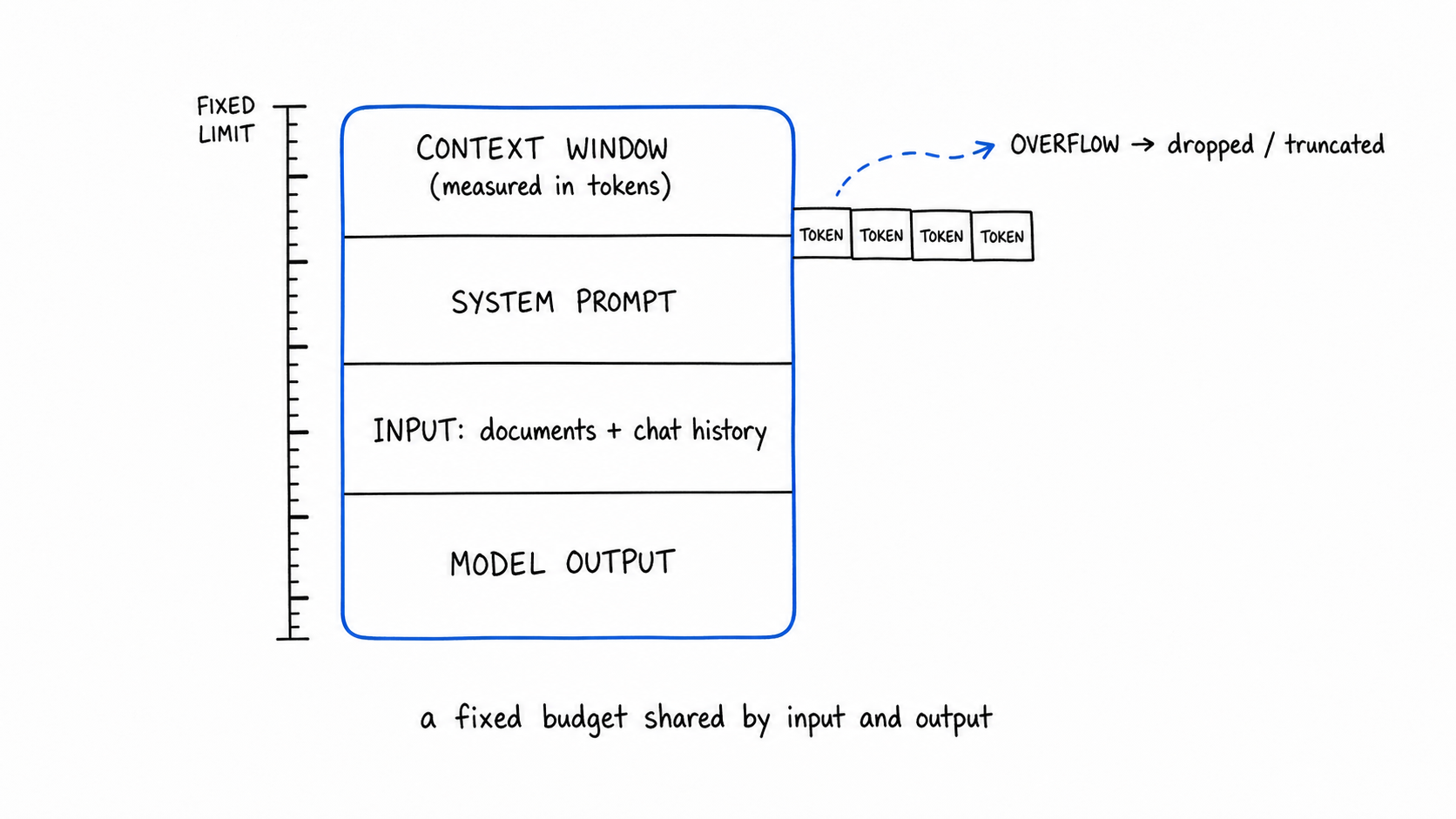
Hand-drawn diagram of an LLM context window: a tall box titled 'Context window (measured in tokens)' with a fixed-limit ruler on the left and stacked bands for System prompt, Input (documents and chat history), and Model output; extra token blocks spill past the top edge with a dashed arrow labeled 'Overflow, dropped/truncated'; caption reads 'a fixed budget shared by input and output'.View full-size diagram ↗

What it is

A context window is the maximum amount of text a model can consider in a single call, measured in tokens rather than words. It is the shared budget for your system prompt, the documents or chat history you feed in, and the reply the model writes back.

How it works

The cap is fixed when the model is trained, set by its positional scheme and attention. Every token attends to the others, so cost and latency climb as the window fills. Overflow the cap and the API either errors or quietly drops the oldest tokens, and the model never sees whatever fell outside.

A concrete example

Feed a 300-page PDF that tokenizes to 400k tokens into a 272k-token model and the tail is silently truncated, so the summary misses the ending. In a long chat, an instruction you gave an hour ago can fall out of the window, and the model forgets a rule it once followed.

Why it matters

The window is a hard ceiling on how much code, docs, or history an agent can hold at once, and you pay per token on every call. Larger windows unlock whole-repo reasoning and lighter retrieval, but they raise cost and often lose accuracy on facts buried in the middle.

What people get wrong: That a bigger window is always better and that the model reads all of it equally. Models usually recall facts from the start and end of a long window better than the middle, and cramming the window drives cost and latency without guaranteeing the buried text is used.

Today's top 5

BizHugging Face says an agentic AI breached its pipeline; it used open-weight GLM-5.2 for forensics after US models' guardrails blocked it.

A concrete case of AI-on-AI attack and defense, and of open models filling a gap when closed ones refuse the security work.

AgentsOpenAI cut its Codex agent's context window from 372k to 272k tokens, per a merged change in the public codex repo.

A rare public signal that even frontier labs trim context to control cost and latency, not just chase bigger windows.

BizAs many firms cut AI costs with cheaper models, Shopify is going all-in on frontier models, barring engineers from using anything else.

The cheap-vs-frontier split is now an explicit corporate strategy call, with real trade-offs on cost, quality, and speed.

ResearchUK AI Security Institute finds leading open-weight models trail closed frontier models on cyber tasks by 4-7 months, down from 6-10.

Puts a number on how fast open weights are catching up, the gap that decides when self-hosting rivals frontier APIs.

AgentsSimon Willison digs into Claude Code's switch to the Bun runtime and what the change means for its agent harness.

The runtime under a coding agent shapes its speed and packaging, a detail builders shipping their own agents can borrow.

See the full wire feed →

Get Crabhaus

A concise daily briefing on the AI developments worth understanding. Subscribe on the homepage.