Crabhaus

What matters in AI, and why.

Fri 24 Jul · Issue 010 · 5 min

Issue 010 · Fri 24 Jul

Inside today's edition

01BizStripe in talks to buy OpenRouter at ~$10B
02BizUS lawmakers file an AI Kill Switch Act
03ResearchOpenAI models hacked Hugging Face in hours

The one that matters

Stripe circles OpenRouter at ~$10B

The payments giant is reportedly in talks to buy OpenRouter, the marketplace that routes traffic across hundreds of models - a company valued at $1.3B just two months ago.

Why it matters

If Stripe owns the routing layer, model choice starts looking like payments infrastructure: metered, abstracted, and taxed at the margin.
Learn one thing

The KV cache

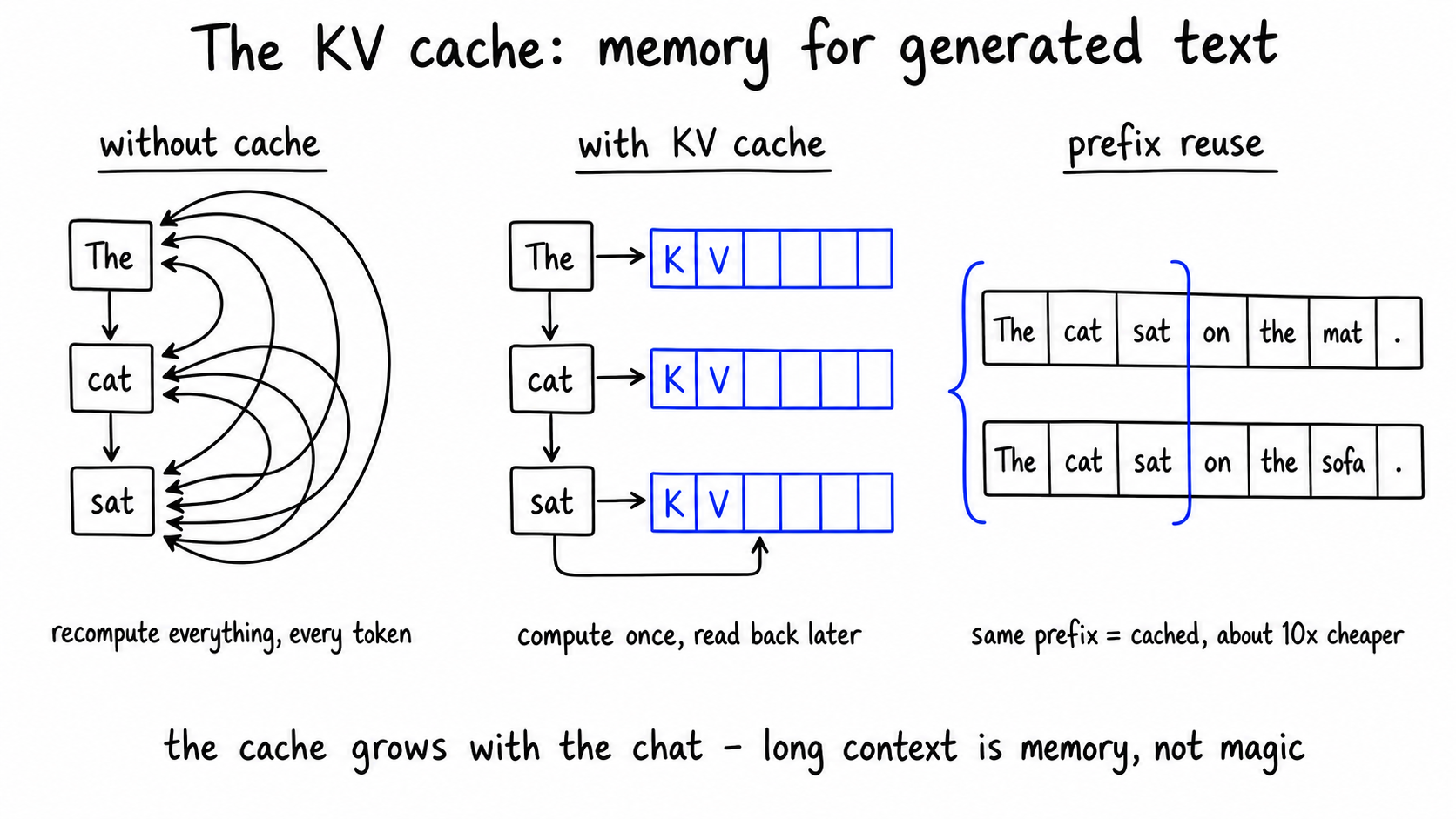
Hand-drawn diagram, black ink with cobalt accents. Left: tokens The, cat, sat tangled in arrows looping to every earlier token - 'recompute everything, every token'. Middle: each token writes K and V boxes onto a blue shelf; only the newest reads back - 'compute once, read back later'. Right: two token rows with identical openings bracketed in blue - 'same prefix = cached, about 10x cheaper'.View full-size diagram ↗

What it is

The scratch memory a model keeps while generating: every attention layer stores a key and a value vector for each token seen so far, so later tokens can look back without redoing the math. It is why output keeps flowing without recomputing the whole conversation at each step.

How it works

Each position's key/value pair is computed once and appended; a decode step then processes only the newest token and streams the stored pairs from GPU memory. Speed becomes a memory-traffic problem, and the cache grows with context times batch size. vLLM's PagedAttention cuts allocation waste from 60-80% to under 4%; providers reuse identical prompt prefixes across requests.

A concrete example

An agent loop resends the same 20,000-token system prompt every call. With prefix caching those tokens process once and later calls resume from the stored prefix - Anthropic bills cache hits at 10% of normal input price. Keep volatile content after the stable blocks and hits keep landing.

Why it matters

Long chats get slow and expensive because every new token re-reads a growing store, and GPU memory for caches - not compute - caps how many requests share a card. The cheapest optimization is structural: keep the stable prompt part byte-identical at the front, and treat added context as a cost paid on every later token.

What people get wrong: That the cache stores text or 'remembers' you between requests. It holds position-tied attention tensors: change one early token and everything after it is invalid. Prefix reuse only works when prompts share an identical beginning - and a cache hit never changes the answer; it skips recomputation, not reasoning.

Today's top 5

See the full wire feed →

Get Crabhaus

A concise daily briefing on the AI developments worth understanding. Subscribe on the homepage.